
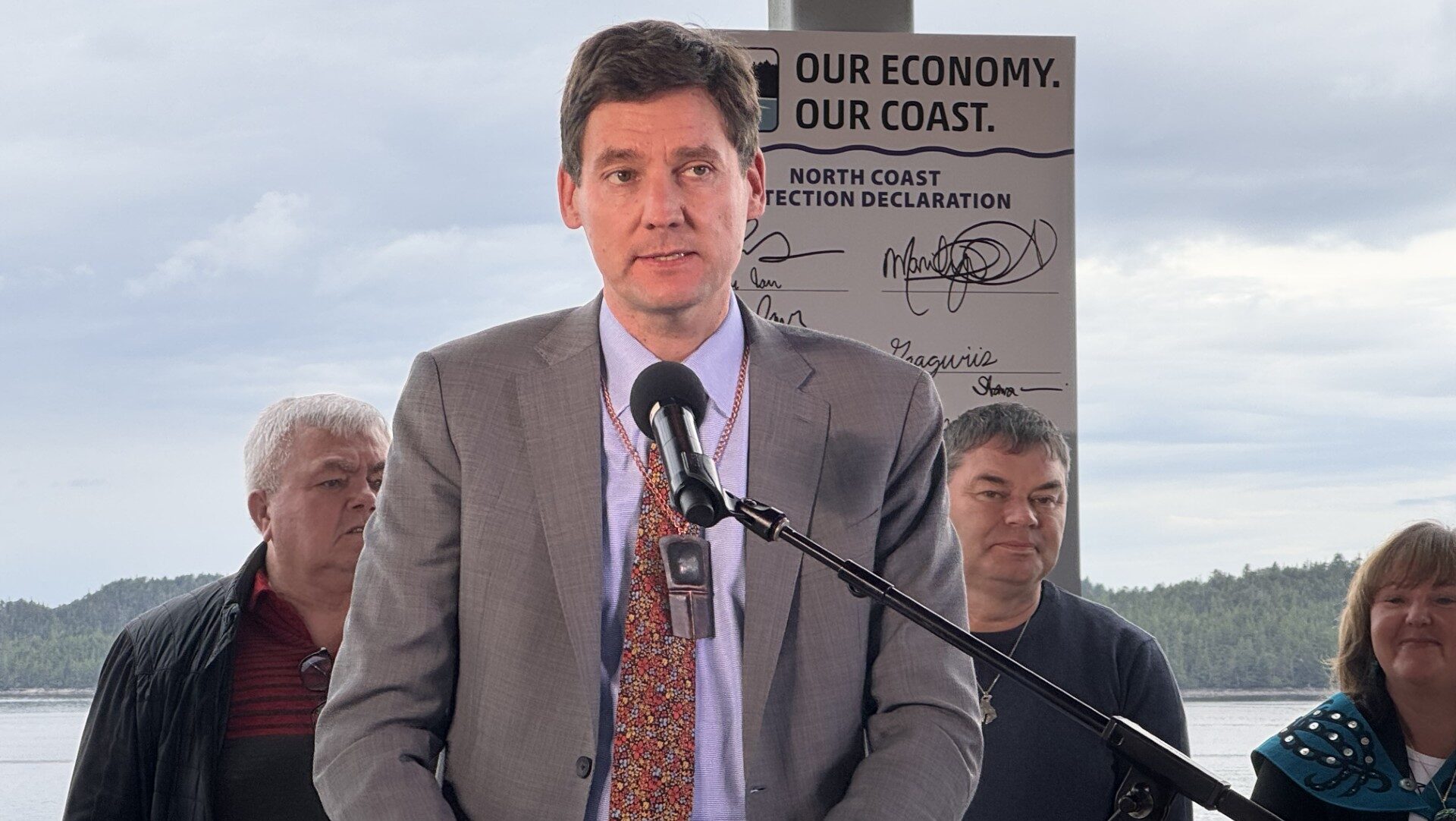

Premier David Eby said protecting B.C.’s North Coast from crude oil tankers will enable Prince Rupert and other northwestern communities to focus on economic growth without damaging the environment.
Speaking in Prince Rupert on Wednesday, Premier David Eby discussed the federal government’s commitment to keep the North Coast crude oil tanker ban in place as part of the Canada-B.C. Co-operative Prosperity Agreement.
Eby said the agreement provides certainty for businesses while recognizing that economic development, environmental sustainability, partnerships with First Nations and support from local communities must go hand in hand.
He added that the North Coast already has a sustainable economy that generates more than $3 billion a year and relies on the health of its marine environment.
“The agreement with the federal government provides certainty for business. It provides a path forward to grow our economy, but it also recognizes that for British Columbians, our shared values of ensuring that economic development goes hand in hand with environmental protection, with partnership with First Nations and support for local communities are values that we will not abandon,” Eby said.
When asked by Vista Radio how the province’s environmental protections fit alongside its goal of expanding the Port of Prince Rupert and advancing other major economic projects on the North Coast, Eby said the region has an opportunity to continue growing while protecting what makes the coast unique.
He said maintaining the tanker ban allows governments, First Nations and local communities to focus on sustainable economic development instead of fighting proposed heavy oil pipelines and tanker traffic.
“Now we can do the work together to build on the Great Bear Sea initiative, to talk about how do we deepen the activity that’s sustainable, that helps grow the economy here and improve life in the community,” Eby said.
Eby also noted that the provincial government is interested in working with First Nations and Northwestern communities to increase the number of Indigenous guardian programs and improve their emergency response systems as shipping increases.
He said improving their emergency response system while continuing to build a sustainable industry is important for ensuring economic development alongside environmental protection in the North Coast.